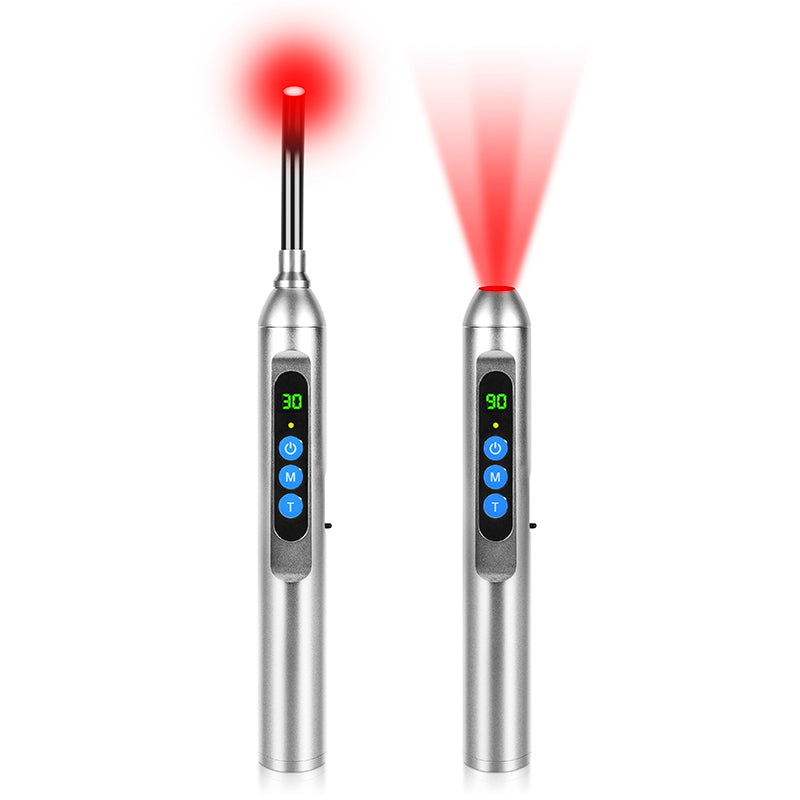

The red light therapy market is flooded with devices claiming to be "clinical-grade" or "medical grade" while offering little proof that their specs will actually deliver results. Learning to spot incomplete irradiance claims, vague terminology, and missing measurement details helps you avoid overpaying for marketing rather than performance.

What "Clinical-Grade" and "Medical Grade" Actually Mean
Terms like "clinical-grade," "hospital grade," or "professional grade" appear frequently on product pages, yet they rarely come with a clear definition. These phrases often function as marketing language rather than a regulated standard. According to FDA guidance on photobiomodulation devices, claims should be evaluated through proper labeling and submission details rather than prestige wording alone.
This FDA document on PBM device labeling emphasizes that irradiance and other performance figures must be tied to specific conditions. Without that context, a label tells you more about positioning than about therapeutic consistency.
Photobiomodulation (PBM) itself is an umbrella term for non-ionizing light therapy using lasers or LEDs. Research commonly discusses red light roughly in the 600-750 nm band and near-infrared in the 750-1100 nm range, but these wavelength windows alone do not prove a device meets clinical standards.
Why Irradiance Claims Are So Often Misleading
Irradiance measures light power received per unit area, typically expressed in mW/cm². The number is meaningless without knowing the distance and measurement method used. An irradiance claim without distance or methodology is incomplete and should be treated skeptically, as the same device can appear dramatically stronger or weaker depending on how far away it is tested.
Many manufacturers quote impressive figures measured right at the surface or under ideal lab conditions that do not reflect real-world use at the recommended treatment distance. As this official FDA guidance on photobiomodulation devices explains, credible specs separate wavelength, irradiance, and distance so buyers can make fair comparisons.
Look for listings that clearly state "X mW/cm² at 6 inches" or similar. If the distance is missing, the number cannot be reliably compared across brands.
Credible vs. Suspicious Red Light Therapy Claims
Heuristic checklist for judging red light therapy irradiance and spec claims
View chart data
| Category | Credible | Suspicious |
|---|---|---|
| Distance disclosed | 1.0 | 0.0 |
| Measurement method disclosed | 1.0 | 0.0 |
| Wavelength band stated | 1.0 | 0.0 |
| Third-party report available | 1.0 | 0.0 |
| Higher number = better claim | 0.0 | 1.0 |
| Contextualized irradiance value | 1.0 | 0.0 |
Illustrative/heuristic chart based on article guidance: credible claims usually disclose measurement distance, method, and wavelength band, while suspicious claims omit context or treat a larger number as inherently better. Irradiance should be interpreted with distance; no false precision is implied.
Common Myths About Clinical-Grade Red Light Therapy
Several widely repeated claims deserve closer scrutiny:
Myth: "Clinical-grade" or "medical-grade" guarantees superior results.
Reality: These labels often signal positioning rather than proof. They become meaningful only when the seller provides a specific standard, test methodology, or regulatory context. Otherwise they remain marketing language.
Myth: A higher irradiance number automatically means a better device.
Reality: Irradiance drops with distance. A headline figure without the test distance cannot be compared reliably to another product's number.
Myth: Headline wavelength claims prove the device is more advanced.
Reality: Red and near-infrared wavelengths are the main bands discussed in photobiomodulation research, but there is no single universal best wavelength for every use case. Performance depends on the target tissue, dose delivered, and setup conditions.
Research shows that reported benefits depend on the condition being treated, so "clinical-grade" should not be treated as proof of effectiveness across all uses.
How Wavelength, Beam Angle, and Treatment Distance Affect Performance
Wavelength determines how deeply light penetrates tissue, while beam angle and distance determine how much of that light actually reaches the target. A device with excellent surface irradiance may deliver far less at the 6–12 inches typically recommended for panels.
Look for specifications that list a realistic treatment distance and corresponding irradiance. Credible manufacturers also clarify whether they use a full-spectrum measurement or only peak wavelength. Broad claims such as "660nm + 850nm" are common, but exact output across the band matters more than the center numbers.
Buyer Checklist: How to Verify a Red Light Therapy Device
Use this practical checklist when comparing high-ticket panels:
- Distance disclosed? The irradiance figure must include the measurement distance. Prefer devices that quote values at 6, 12, or 18 inches rather than "at the surface."
- Measurement method stated? Ask whether they used a spectroradiometer or a less accurate solar power meter. Transparent brands often share the exact instrument and test conditions.
- Wavelength range specified clearly? Prefer listings that give the actual band (e.g., 630–680 nm and 820–880 nm) rather than single "magic" numbers.
- Third-party test reports available? Look for recent, independent lab data rather than in-house testing only. Raw data or downloadable reports add credibility.
- Regulatory wording precise? Vague "FDA registered" claims differ from actual clearance for specific indications. Check exactly what the documentation supports.
- Intended use explained? Stronger products tie claims to specific applications instead of promising general wellness miracles.
If most of these items are missing or answered with marketing copy, treat the "clinical-grade" label as promotional rather than substantive.

Red Flags That Suggest Exaggerated or Fake Claims
Watch for these warning signs on product pages:
- Irradiance quoted without any distance or test setup
- Heavy emphasis on "medical grade" or "hospital grade" with no supporting documentation
- Claims that one wavelength is universally superior
- Comparisons that pit their device against competitors without showing identical test conditions
- Absence of any third-party verification or downloadable test reports
Biohacker forums and Reddit threads frequently highlight these exact issues, noting that many premium-looking panels deliver far less usable light than advertised once real-world distance is factored in.
How to Evaluate Manufacturer Transparency and Documentation
Genuine manufacturers provide more than polished marketing. They share spectroradiometer reports, explain their testing protocol, and often publish the full emission spectrum rather than single peak values. They also avoid direct medical claims that would require FDA clearance for specific diseases.
When a brand offers clear, downloadable documentation and invites questions about their measurement methods, the likelihood that their "clinical-grade" positioning reflects real engineering increases. Conversely, brands that respond to inquiries with more hype or deflection are waving a significant red flag.
Final Decision Framework for High-Ticket Purchases
Before spending several hundred or several thousand dollars, demand evidence that matches the price. A credible device should let you calculate approximate dose (Joules/cm²) at the distance you plan to use it. If the manufacturer cannot or will not provide the necessary details, the "clinical-grade" claim is likely more marketing than medicine.
Prioritize products that disclose distance-specific irradiance, provide wavelength bands with supporting test data, and avoid vague prestige labels without substantiation. This approach protects your investment and increases the chance that the device you choose will actually deliver the performance described in photobiomodulation research.
Important note on health and comfort: This article discusses technical standards and buying guidance for red light therapy devices. It is not medical advice, does not diagnose or treat any condition, and does not guarantee specific health outcomes. Results depend heavily on individual factors, proper usage, and device quality. If you have existing eye conditions, skin sensitivities, or other health concerns, consult a qualified healthcare professional before using red light therapy. Perceived comfort and benefits can vary widely based on room conditions, treatment distance, and personal physiology.
By focusing on verifiable specs instead of impressive-sounding labels, you can navigate the red light therapy market with greater confidence and make purchasing decisions grounded in evidence rather than hype.