
Many people buy at-home red light therapy devices expecting quick improvements in skin, recovery, or pain relief, only to feel disappointed when results fail to appear. The truth is that most perceived failures stem from five avoidable mistakes in how the device is used rather than the technology itself. Correcting these errors can help you deliver a more consistent effective dose, improve adherence, and give photobiomodulation the time it needs to work. This guide breaks down the biggest pitfalls with practical fixes so you can optimize your routine and avoid wasted effort.

Mistake 1: Using the Wrong Dose or Session Length
The most common error is treating session time as a one-size-fits-all number instead of calculating the actual energy delivered to your skin or tissue. Red light therapy works through photobiomodulation (PBM), where the beneficial effects depend on the fluence, or energy density, typically discussed in joules per square centimeter (J/cm²). Irradiance (power density in mW/cm²) tells you how quickly that energy arrives, but only the combination of irradiance, distance, and time produces the right dose.
As explained in this guide to irradiance versus fluence, simply running a high-powered panel longer than recommended can push you past the therapeutic window. The Arndt-Schulz law suggests that too little energy does nothing while too much can inhibit the response you want. Many users either stop sessions too early or overdo them, both of which reduce results.
Practical fix: Start by checking your device's irradiance at the exact distance you plan to use it. A common planning range for skin and superficial tissue is 20–60 J/cm² per session depending on the goal, though exact targets vary by wavelength and individual response. Use the formula: fluence (J/cm²) = irradiance (W/cm²) × time (seconds). Many quality panels list recommended session times for specific distances; follow those first and adjust gradually while tracking how your body responds.
Mistake 2: Inconsistent Sessions or Stopping Too Soon
Photobiomodulation effects are cumulative. A single session rarely produces dramatic visible changes, yet many users try red light therapy a few times, see nothing obvious, and conclude the device does not work. Research and clinical reviews emphasize that regular treatments over weeks are typically necessary before benefits in skin appearance, recovery, or comfort become noticeable.
This evidence-based consensus on clinical PBM applications and related reviews underline that consistency matters more than intensity in early stages. Skipping days or stopping after one or two weeks prevents the biological signaling cascades from fully engaging.
Practical fix: Treat red light therapy like brushing your teeth. Choose a frequency you can maintain—often 3–7 days per week depending on the protocol—and commit to at least 4–8 weeks before judging outcomes. Use a simple calendar or app reminder. If life gets busy, even reduced but regular sessions outperform sporadic intense ones. Track subjective markers such as skin texture, morning stiffness, or sleep quality to notice gradual shifts that objective measurements might miss.
Mistake 3: Incorrect Distance or Positioning
Holding the device too far away, at an angle, or with clothing in the way dramatically lowers the effective irradiance that reaches the target tissue. Irradiance falls off with distance—often following a pattern closer to the inverse square law for many LED arrays—meaning doubling the distance can reduce power density to roughly one quarter. Poor positioning also creates uneven exposure across the treatment area.
This is why the same panel can feel effective for one user and useless for another. Incorrect distance is one of the fastest ways to turn a clinically capable device into an under-dosed one.
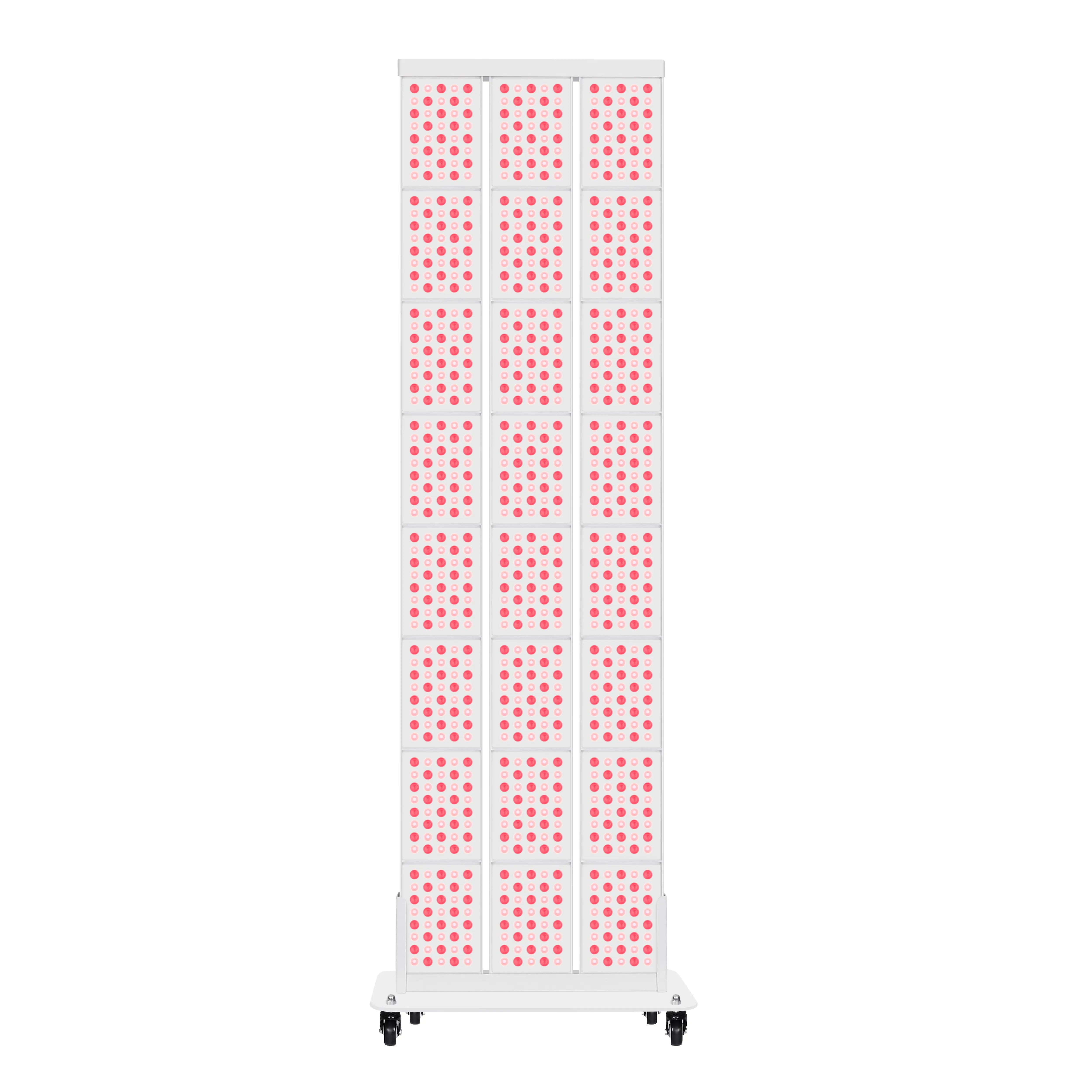
Practical fix: Always measure and repeat the manufacturer's recommended treatment distance. Use a tape measure or marked mat for consistency. Remove clothing or thin barriers for direct skin contact when appropriate, and keep the panel perpendicular to the target area. For larger full-body panels, stand or sit at the specified range rather than pressing too close, which can also cause uneven heating. Re-check distance every few sessions because posture naturally drifts.
Mistake 4: Expecting Immediate Results
Red light therapy is not a light switch. Cellular responses such as improved mitochondrial function, reduced inflammation, and increased collagen production take time to translate into noticeable changes. Many beginners expect visible skin tightening or pain relief after one or two uses and become discouraged when it does not happen.
Harvard Health notes that regular red light treatments are necessary to achieve results and that the therapy complements, not replaces, foundational habits like sleep, nutrition, and sun protection. Expecting instant transformation sets unrealistic benchmarks and leads to early abandonment of an otherwise useful tool.
Practical fix: Set expectations around gradual progress. Many users report subtle shifts in energy, recovery, or skin feel within 2–4 weeks, with more visible cosmetic or performance benefits often appearing between 6–12 weeks of consistent use. Photograph skin areas under consistent lighting, keep a simple symptom journal, or measure recovery metrics such as post-workout soreness. This objective tracking helps you see changes that daily mirror checks miss.
Mistake 5: Ignoring Device Specifications and Quality
Buying based on headline wattage or vague “clinical grade” claims without understanding wavelength, irradiance at distance, flicker, or electromagnetic field (EMF) output leads to poor real-world performance. Two panels with similar total power can deliver very different effective doses if one has inferior LED binning, wider beam spread, or higher flicker.
Wavelength (typically 660 nm red and 850 nm near-infrared) and irradiance measured with proper spectroradiometry are critical. Many devices inflate numbers when tested with inaccurate solar meters instead of lab-grade equipment. Ignoring these details means you may be under-dosing or exposing yourself to unnecessary flicker or EMF that can reduce comfort during longer sessions.
Practical fix: Learn to read specifications like a pro. Prioritize devices that publish irradiance at specific distances, confirm dual-wavelength output with narrow bandwidths, and provide third-party testing data for EMF and flicker. This guide on verifying RLT specs walks through practical testing steps you can do at home. Choose panels designed for stable output and low EMF if you plan to use them daily near your head or for sleep routines.
How Common Mistakes Affect Delivered Dose Over Time
The chart below illustrates how the same four-week plan can produce dramatically different cumulative energy delivery when common mistakes are made. These values are illustrative planning estimates based on standard dose ratios (mid-range target around 42 J/cm² per week within common 20–60 J/cm² ranges). They show direction and magnitude only—not measured clinical outcomes.
How Red Light Therapy Mistakes Change Delivered Dose Over 4 Weeks
Illustrative comparison of cumulative dose delivery under common red light therapy mistakes versus a simple optimal protocol.
View chart data
| Category | Optimal protocol | Wrong distance | Too short sessions | Inconsistent use |
|---|---|---|---|---|
| Week 1 | 42.0 | 10.5 | 21.0 | 30.0 |
| Week 2 | 84.0 | 21.0 | 42.0 | 60.0 |
| Week 3 | 126.0 | 31.5 | 63.0 | 90.0 |
| Week 4 | 168.0 | 42.0 | 84.0 | 120.0 |
Illustrative weekly cumulative fluence (J/cm²) built from standard dose planning ratios: optimal delivery assumes a target around 42 J/cm² per week (within common 20-60 J/cm² session ranges); wrong distance is modeled as ~50% lower irradiance from distance/beam spread loss; too short sessions are modeled at ~50% of target time; inconsistent use is modeled at ~75% adherence. Values are planning-level estimates, not measured trial outputs.
How to Choose and Set Up Red Light Therapy for Your Needs
Before purchasing or adjusting your current device, run through this quick checklist:
- Confirm the panel publishes irradiance at a realistic treatment distance (not just at the surface).
- Verify both 660 nm and 850 nm wavelengths with narrow bandwidths for your specific goals (skin versus deeper tissue).
- Check for low EMF and zero-flicker performance if you will use the device near your head or during evening routines.
- Calculate whether the recommended session length fits your schedule. If it requires 30+ minutes daily, adherence often drops.
- Plan your positioning: can you maintain the exact distance comfortably and repeatably?
- Commit to a minimum 6–8 week consistent protocol before evaluating results.
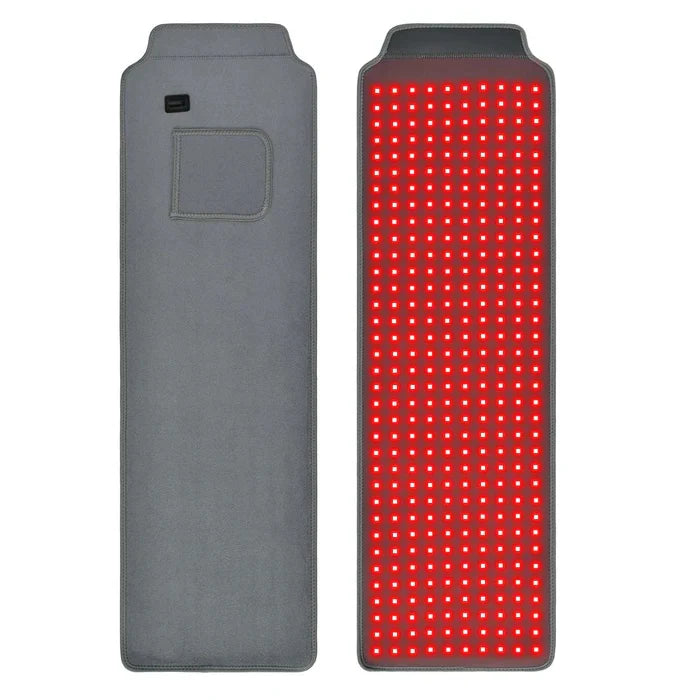
Following these steps turns red light therapy from a possible disappointment into a reliable part of your wellness routine. Quality full-body panels, targeted belts, or convenient wraps can all deliver results when used with proper dosing and consistency.

If you already own a device and are not seeing benefits, revisit your distance, session timing, and weekly frequency first. Small adjustments often produce the biggest improvements. For those shopping, focus less on total wattage and more on irradiance at distance, published testing data, and how the device fits your actual daily life.
Important comfort and safety note: This article discusses setup advice and usage protocols for general wellness only. It does not constitute medical advice, diagnosis, or treatment. Red light therapy may feel more comfortable in certain setups but individual responses vary. If you experience persistent discomfort, skin irritation, or have existing eye conditions, photosensitizing medications, or other health concerns, consult a qualified healthcare professional before continuing. Always follow device-specific safety instructions regarding eye protection.
By avoiding these five mistakes you give yourself the best chance of experiencing the cumulative benefits that proper photobiomodulation routines can provide.
References
- Irradiance vs. Fluence: The Math of Effective RLT Dosage
- How to Verify RLT Specs: A Guide to Irradiance and EMF Testing
- Harvard Health Publishing. Red light therapy for skin care. Available at: https://www.health.harvard.edu/skin-and-hair-health/red-light-therapy-for-skin-care
- Evidence-based consensus on the clinical application of photobiomodulation. JAAD (2025). https://pubmed.ncbi.nlm.nih.gov/40253006/