
Red Light Therapy for Pre-Workout: Boost Energy and Power
Medical Disclaimer: This guide is for informational purposes only and does not constitute medical advice. Red light therapy (RLT) is a supportive tool and should not replace professional medical diagnosis or treatment. Consult with a healthcare provider or sports medicine specialist before beginning a new therapy, especially if you have underlying health conditions, are pregnant, or are taking light-sensitive medications.
Disclosure: This article is published by YouLumi and contains links to our professional-grade RLT products. Our recommendations are based on a combination of internal testing, industry standards, and available peer-reviewed literature.
Summary
Red light therapy (photobiomodulation) applied 15–30 minutes before exercise serves as a "pre-conditioning" tool that may enhance mitochondrial ATP production, delay muscle fatigue, and support peak power output. By stimulating cytochrome c oxidase, this non-invasive protocol prepares muscle tissue for high-intensity demands, offering a potential competitive edge for athletes and biohackers seeking to optimize their performance window.

Key Takeaways
- Mitochondrial Priming: Pre-workout RLT is associated with increased ATP synthesis. While individual results vary, some laboratory models have observed increases in cellular energy markers ranging from 30% to 70% (Ferraresi et al., 2015).
- Delayed Fatigue: Applying 660nm and 850nm wavelengths before exercise helps buffer oxidative stress, potentially allowing for higher training volume before reaching exhaustion.
- Performance Metrics: Small-scale clinical trials have reported improvements in peak power and strength metrics, often in the 5–15% range, when muscles are "pre-conditioned" with light.
- Optimal Timing: For localized muscle groups, a 15–30 minute window prior to training is recommended; systemic application may be effective 1–2 hours before.
- Dosage Precision: Success depends on the Arndt-Schulz Law; achieving a target dose of 4–10 J/cm² is critical, as over-exposure can lead to inhibitory effects.
How Red Light Pre-Conditions Muscles for Peak Performance
The traditional view of red light therapy often centers on post-workout recovery, yet the science of "pre-conditioning" is an emerging standard for performance optimization. When you expose muscle tissue to specific wavelengths of red (660nm) and near-infrared (850nm) light before a session, you are essentially "priming" your cellular batteries.
The primary target is the mitochondria, specifically the enzyme cytochrome c oxidase (CCO). By absorbing light photons, CCO facilitates a more efficient electron transport chain. A key mechanism involves the dissociation of nitric oxide (NO) from CCO; light therapy "kicks" the NO off, allowing oxygen to bind more effectively and accelerating the production of Adenosine Triphosphate (ATP).
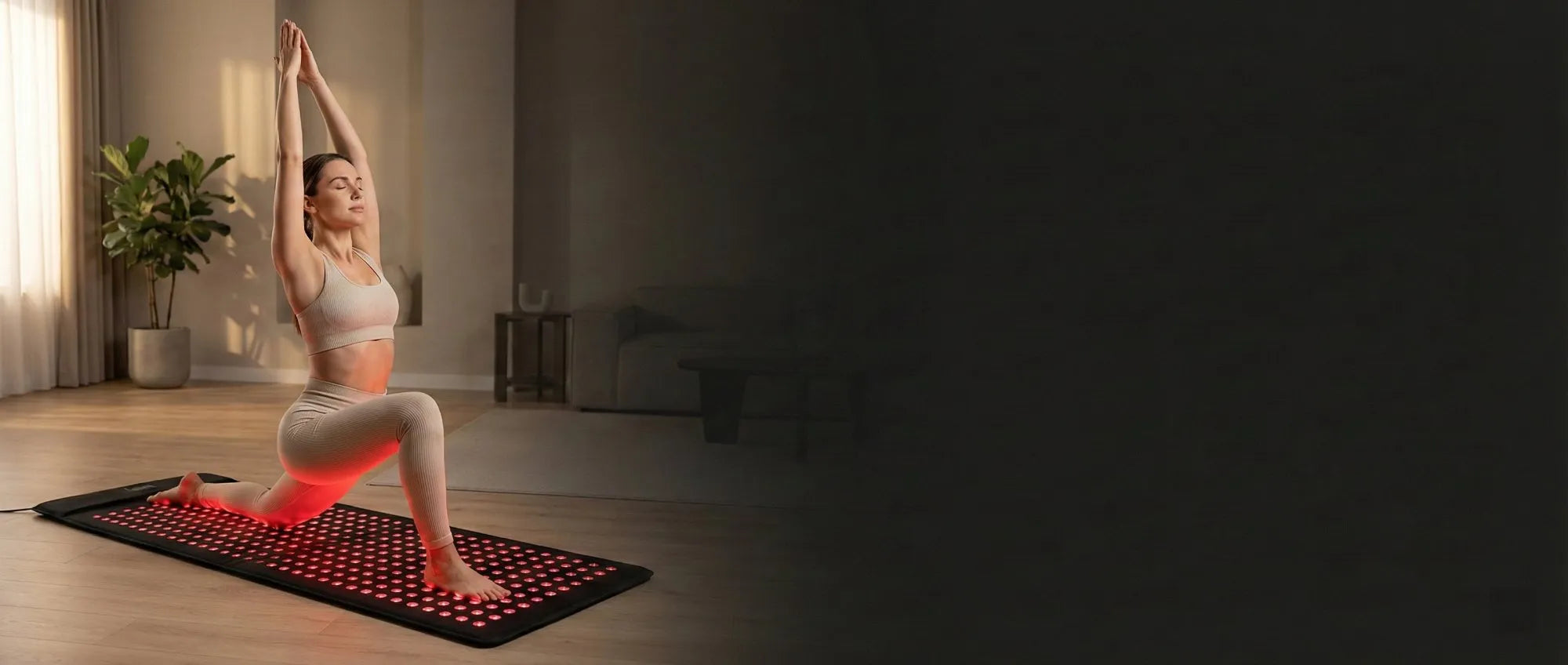
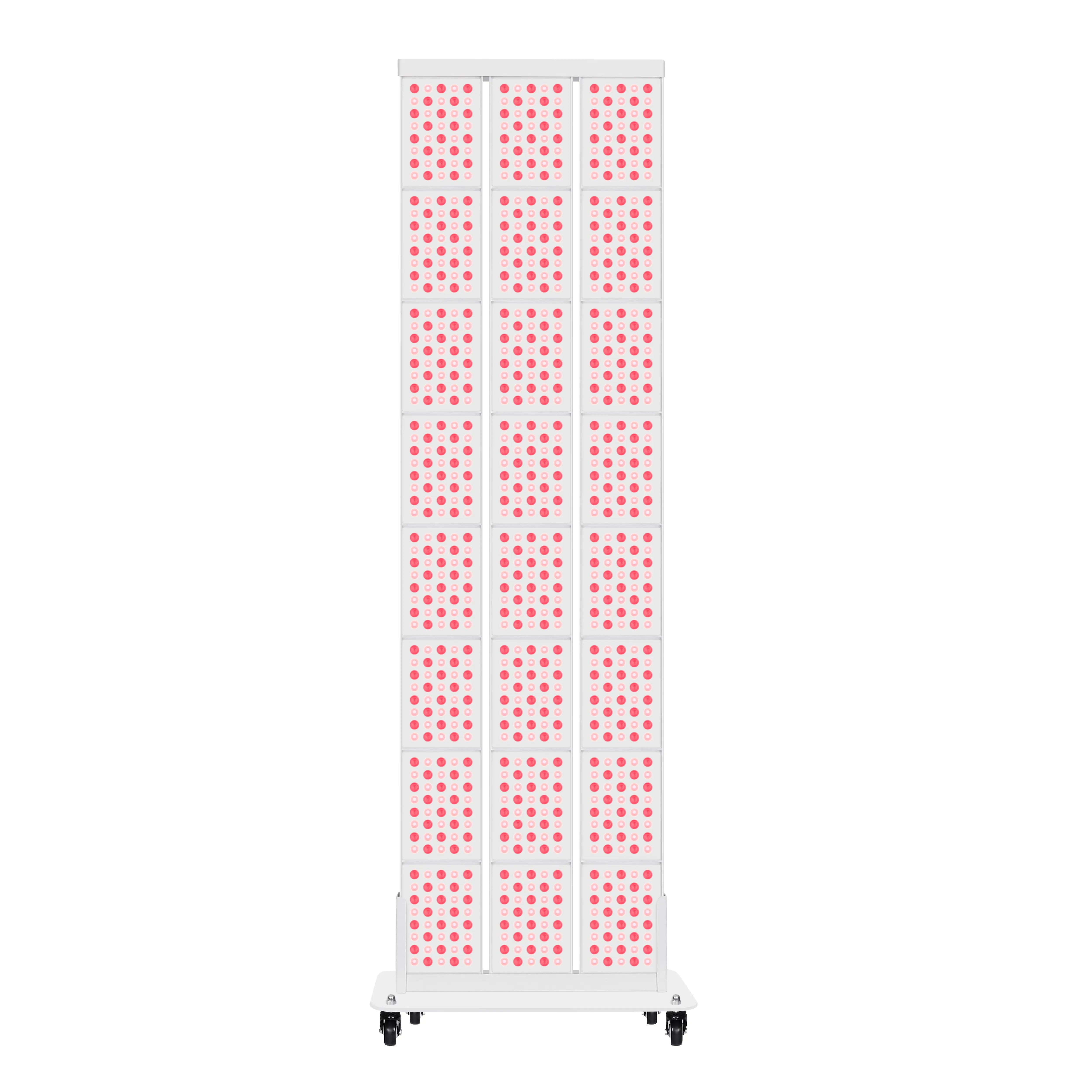
Research suggests that pre-conditioned muscles exhibit a higher threshold for oxidative stress. For those utilizing high-output equipment like the YOULUMI Red Light Therapy Panel - IPR-005, the goal is to saturate the target muscle groups with enough energy to trigger this stimulatory response without exceeding the therapeutic window.
Expert Note: These effects are highly dependent on the device's irradiance (power density). Low-power consumer devices may fail to reach deep muscle tissue, rendering the pre-conditioning protocol ineffective.

Strategic Timing and Protocols for Athletic Goals
The timing of your session should align with the metabolic pathway you intend to support.
Recommended Pre-Workout RLT Protocol
| Goal | Timing | Wavelength Focus | Target Area |
|---|---|---|---|
| Max Strength/Power | 15–30 mins pre | 660nm + 850nm | Primary movers (e.g., Quads, Chest) |
| Endurance/Cardio | 60–120 mins pre | 850nm (Deep) | Gut/Core & Large muscle groups |
| Hypertrophy (BFR) | 10–20 mins pre | 660nm + 850nm | Targeted limb (Arms/Legs) |
| Skill/Agility | 30 mins pre | 660nm | Large muscle groups & Brain (optional) |
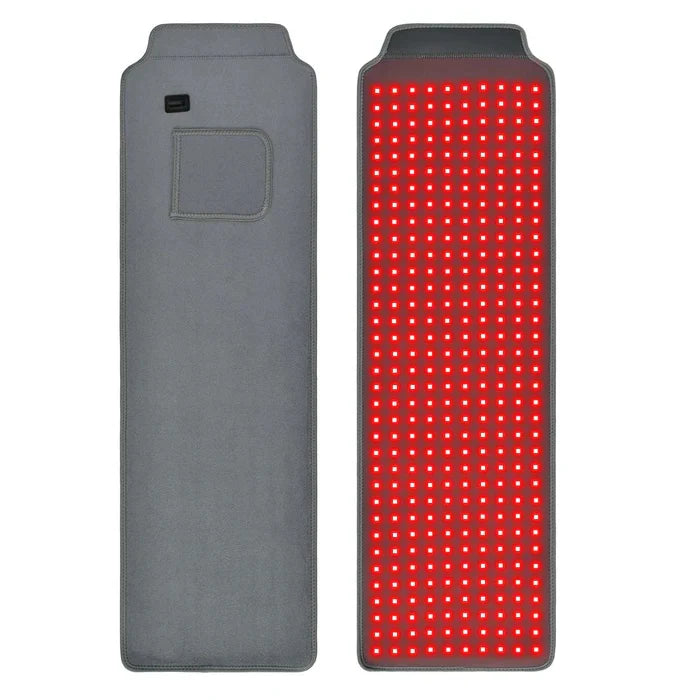
For explosive power, applying red light 15 to 20 minutes before your first set is ideal to ensure ATP levels are peaked. Conversely, endurance athletes may benefit from systemic application up to 2 hours before an event to modulate systemic inflammation. A versatile tool like the YOULUMI Red Light Therapy Belt - IRW-004 allows for targeted application to the core or lower back during pre-race preparation.
Calculating Your Dosage: The Math of Performance
To achieve reproducible results, you must calculate the energy density delivered to the skin, measured in Joules per square centimeter (J/cm²).
The Formula: $$Energy (J/cm^2) = \frac{Irradiance (mW/cm^2) \times Time (seconds)}{1000}$$
Example Calculation: If your Red Light Therapy Panel delivers an irradiance of 50 mW/cm² at a distance of 6 inches:
- Target Dose: 6 J/cm²
- Calculation: $(50 \times \text{Time}) / 1000 = 6$
- Result: 120 seconds (2 minutes) per treatment area.
Note: Always use a calibrated solar power meter or refer to the manufacturer’s verified irradiance charts, as "irradiance inflation" is common in the industry.
Synergies with Supplements and Advanced Training
Physiological mechanisms suggest a potential synergy between RLT and traditional supplements:
- Caffeine: Increases metabolic rate and blood flow, potentially enhancing the delivery of oxygen to "primed" mitochondria.
- Creatine: Provides the raw materials for ATP regeneration, while RLT optimizes the mitochondrial machinery.
- Blood Flow Restriction (BFR): Applying light before a BFR session has been shown in some systematic reviews (e.g., PubMed 40250416) to improve redox status and mitigate extreme oxidative stress associated with occlusion.
Using a Portable Red Light Panel allows for easy integration into a gym environment, ensuring you can apply the protocol immediately before training.
Safety Precautions and Contraindications
While generally considered safe, photobiomodulation is not suitable for everyone.
Contraindications & Warnings:
- Photosensitivity: Do not use if you have a known light-sensitive skin condition or are taking medications that increase photosensitivity (e.g., certain antibiotics, NSAIDs, or retinoids).
- Active Cancer: Avoid application over known primary or secondary tumors.
- Pregnancy: Consult a doctor; while NIR is non-ionizing, its effects on fetal development have not been extensively studied.
- Epilepsy: Individuals with a history of light-triggered seizures should avoid pulsing modes.
- Eye Safety: Never stare directly into the LEDs. Use provided safety goggles, especially when using high-output panels.
Common Pitfalls: The Arndt-Schulz Law
Photobiomodulation follows a biphasic dose response. If you apply too much energy, you may inhibit the mitochondrial processes you intend to boost. Once you reach the optimal density (typically 4–10 J/cm² for muscle), additional exposure provides diminishing returns or may induce temporary cellular fatigue.
High-output panels like the YOULUMI IRP010-05L 1500W Red Light Therapy Panel require significantly shorter exposure times than lower-powered units. For a technical breakdown of these benchmarks, consult our guide on Why Are Red Therapy Lights So Expensive?.
FAQ
Can I use red light therapy through my workout clothes? No. For maximum efficacy, RLT should be applied to clean, bare skin. While 850nm light has some fabric penetration, 660nm light is largely reflected or absorbed by clothing. See Does Red Light Therapy Work Through Clothes? for more details.
How long before my workout should I do red light therapy? The "sweet spot" is 15 to 30 minutes before your warm-up for localized priming. For systemic benefits, 60–120 minutes is acceptable.
Is it better to use red light before or after a workout? They serve different purposes. Pre-workout is for performance and fatigue delay; post-workout is for recovery and reducing DOMS. Many athletes use a short priming session before and a longer recovery session after.
Will red light therapy make me feel hot? High-quality LEDs produce "cold" light. While you may feel a slight warmth from increased blood flow, it should not raise your core body temperature or interfere with thermoregulation.
References
Standards & Regulators
- IEC 60601-2-57:2026: Safety requirements for non-laser light source equipment.
- IEEE 1789-2015: Recommended practices for mitigating health risks from LED flickering.
Research & Clinical Guidelines
- North American Association for Photobiomodulation Therapy (NAALT): Clinical consensus on athletic performance.
- Ferraresi et al. (2015): "Photobiomodulation in human muscle tissue: advantage of LED over laser." Lasers in Medical Science.
- Advanced Science (2025): "Photobiomodulation Strengthens Muscles via Its Dual Functions in Gut-Muscle Axis."
- PubMed (40250416): "Photobiomodulation before blood flow restriction exercises: a systematic review."
- YouLumi Internal Whitepaper: Photobiomodulation Standards: Irradiance, EMF, and Safety (2026).